
Loading...
Serving San Leandro, CA and surrounding areas. (341) 895-9136
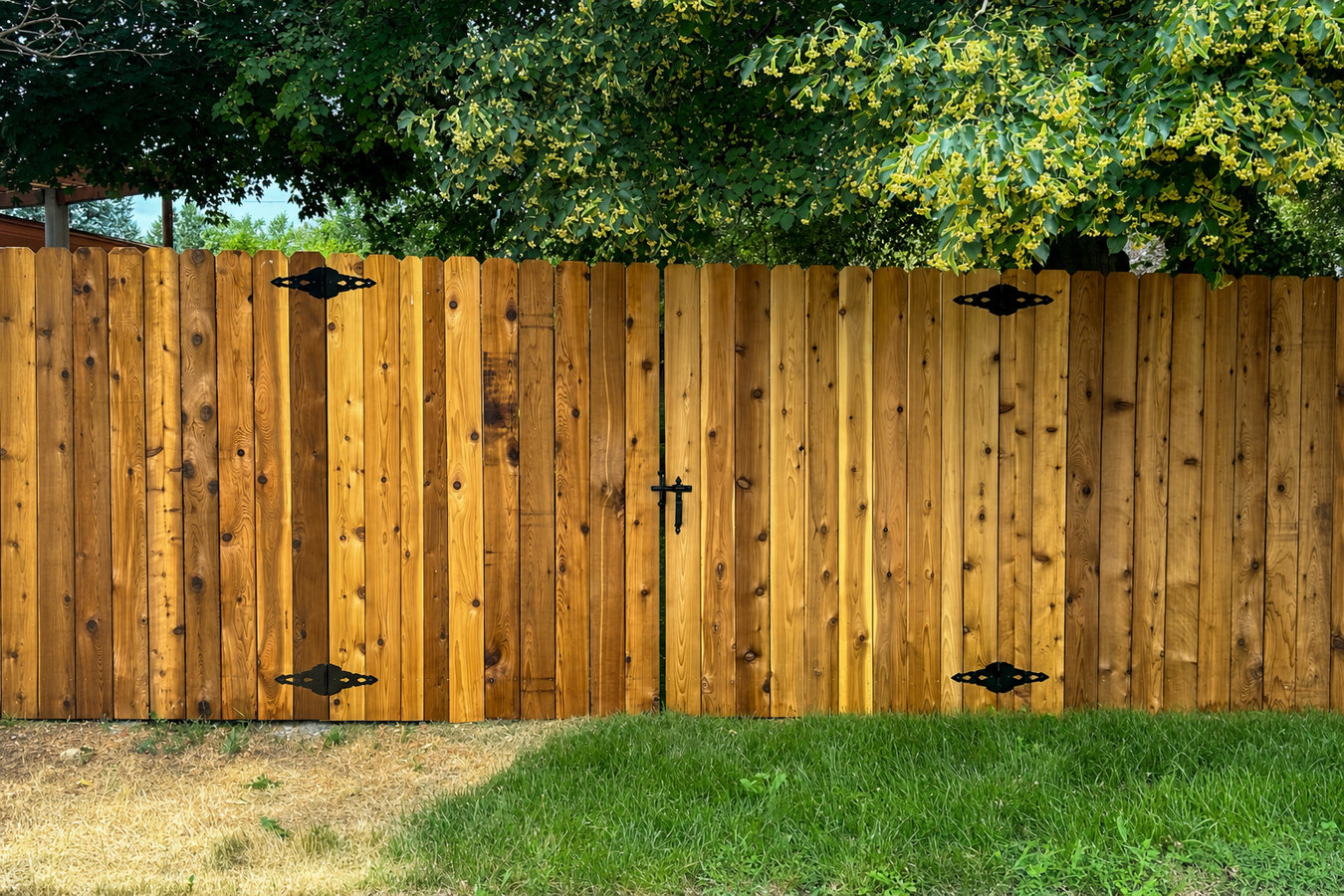
San Leandro lots sit close together. A properly built privacy fence gives you the outdoor space you paid for - without feeling like you are on display every time you step outside.
Privacy fence installation in San Leandro means putting up a solid, gap-free barrier - usually 6 feet tall - along your property line, using materials chosen to hold up in the Bay Area's coastal climate, with posts set deep enough for East Bay clay soils. Most standard backyard installations take one to three days on site, with the full timeline running three to five weeks once you include the permit process.
San Leandro homeowners call us when an existing fence is leaning after a wet winter, when a new dog or young child has made the old 4-foot fence inadequate, or when a neighbor's addition has left their yard feeling exposed. We walk the property with you, confirm the fence line against your actual boundary, and handle the San Leandro Community Development Department permit so you do not have to learn how the city's system works. If your fence has damage that might be repaired rather than replaced, our fence repair service is worth a look before you commit to a full installation.
If you can push on a post and feel it move, or if boards are visibly rotting, splitting, or falling off, the fence has reached the end of its useful life. In San Leandro's damp coastal climate, wood fences that have not been regularly sealed deteriorate faster than homeowners expect - what looks like surface weathering is often rot that goes deeper. At that point, repairs rarely make financial sense.
If you have recently adopted a dog, had a child, or started spending more time outside, a fence that felt adequate before may no longer work. A 4-foot fence that kept a previous dog in will not contain a larger breed, and a fence with gaps is not a reliable barrier for young children. This is one of the most common reasons San Leandro homeowners call for a new privacy fence.
San Leandro has seen steady infill development and home additions in recent years. A two-story addition next door or a neighbor who removed mature trees can suddenly leave your backyard feeling exposed. If you can now be seen from a neighboring upper floor or a property that used to be screened by vegetation, a taller privacy fence is often the most practical solution.
If posts that were straight a few years ago are now leaning - especially after a wet winter - East Bay clay soil is likely the cause. Clay expands when it absorbs water and can push posts sideways or upward over time, particularly if they were not set deep enough originally. Once posts start moving, the whole fence line becomes unstable, and patching individual posts rarely holds for long.
We install privacy fencing in wood, vinyl, and composite materials. Wood is the most affordable option upfront and the most popular choice among San Leandro homeowners who want a natural look, but it requires sealing or staining within the first year and maintenance every two to three years after that - especially given the bay-side moisture this area sees. For homeowners who want less long-term upkeep, vinyl and composite give you a solid, gap-free fence with almost no maintenance required. We also install wood fences as standalone projects for homeowners who want the classic look without the full privacy panel configuration.
Every privacy fence installation starts with a property walk and a conversation about where your actual boundary is - not just where an old fence happens to sit. We confirm the fence line, identify any slopes or obstacles, discuss gate placement, and give you a written estimate before any work begins. The permit goes to the San Leandro Community Development Department and we track its status so you do not have to. Post holes are dug and posts are set at depths appropriate for East Bay clay soil, which means a fence that stays plumb after the rainy season, not one that leans by March.
Suits homeowners who want the natural look of wood and are willing to maintain it with periodic sealing or staining every two to three years.
Suits homeowners who want a low-maintenance fence that holds up to Bay Area coastal conditions without painting, sealing, or rot.
Suits homeowners who want the appearance of wood with the durability of a synthetic material - a good fit for San Leandro's coastal climate.
Suits any installation where yard access, trash can placement, or side entry needs to be planned and built into the fence from the start.
Much of San Leandro's residential housing was built between the 1940s and 1970s, and many of those properties still have original fencing - some of it sitting on informal or uncertain property lines. Before installation begins, confirming your actual boundary matters more in an older established neighborhood than in a newer subdivision where survey stakes are still visible. San Leandro also sits close to the bay, and the combination of coastal fog, salt air, and damp winters is genuinely hard on untreated wood. Fence boards in this climate gray, crack, and absorb moisture faster than in drier inland areas - which is a real reason to consider the right material for this environment, not just whatever is cheapest upfront. Homeowners in Alameda face the same coastal exposure and similar older housing stock, and we handle privacy fence installations there regularly.
The other local factor that catches homeowners by surprise is East Bay clay soil. Clay expands when it gets wet and contracts when it dries - that cycle puts steady stress on fence posts that are not set deep enough. A post that looks fine in October can be noticeably leaning by March. Experienced contractors in this area know to go deeper than the minimum and to use the right concrete mix for this type of soil movement. It is one of the details worth asking about specifically when you are comparing bids. Homeowners in San Lorenzo deal with the same soil conditions, and we factor it into every installation we do there.
For an authoritative reference on what wood fence maintenance looks like in coastal California climates, the UC Cooperative Extension provides useful guidance on exterior wood care. For San Leandro permit requirements, the City of San Leandro Community Development Department is the right starting point.
Call or submit the contact form and we will get back to you within one business day. We ask a few basic questions - how much fence you need, what material you are thinking about, whether there is an existing fence to remove - and schedule a time to walk the property with you.
We measure your fence line, note any slopes or obstacles, discuss gate placement, and ask about your property survey. You receive a written estimate within a day or two. A trustworthy contractor explains what is included and what could change the price - no vague numbers.
Once you approve the estimate, we submit the permit application to San Leandro's Community Development Department. This typically takes one to three weeks. You do not need to go to city hall or track the process - we do that. Work does not legally begin until approval is in hand.
The crew sets posts at depth for East Bay clay soil, attaches rails and boards or panels, and installs any gates. When the fence is finished, we walk the completed job with you before collecting final payment - posts plumb, gates latching, fence line matching what was agreed.
We handle the permit, confirm your property line, and build a fence that stays straight through Bay Area winters.
(341) 895-9136We set posts at depths appropriate for San Leandro's expansive clay soil - deeper than the minimum, with a concrete mix suited to resist seasonal movement. A fence installed this way stays plumb for years. One set at a standard residential depth in this soil often starts to lean within two or three rainy seasons.
On older San Leandro lots, fence lines often drift from their original position over decades. We ask about your property survey at the estimate stage and recommend one if it is not available. A fence built on your actual boundary protects you in neighbor disputes and when you eventually sell.
We submit the San Leandro Community Development Department permit application, track its status, and confirm approval before scheduling the crew. An unpermitted fence can be flagged during a home sale and may need to be rebuilt at your expense - a problem that is entirely avoidable when the permit is pulled upfront.
We advise homeowners on material choice based on San Leandro's actual climate - coastal moisture, salt air, and clay soil included - not just price. The American Fence Association guidelines we follow include material suitability for local conditions, which matters more in the Bay Area than in drier inland markets.
The combination of proper post depth, confirmed boundary, and the right material for this climate is what separates a privacy fence that looks the same five years from now from one that is already a problem by the next rainy season.
If your existing privacy fence has specific damage - a leaning post, a rotted section, a gate that won't close - repair may be the right call before a full replacement.
Learn MoreClassic wood fencing in a variety of styles, from board-on-board privacy panels to open picket designs for front yards and side yards.
Learn MoreBay Area permit queues fill up in spring - reach out now for a free estimate and we will lock in your project date.